STM32 Embedded Displays
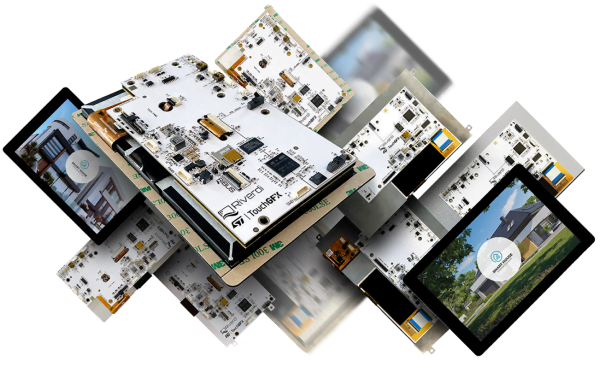
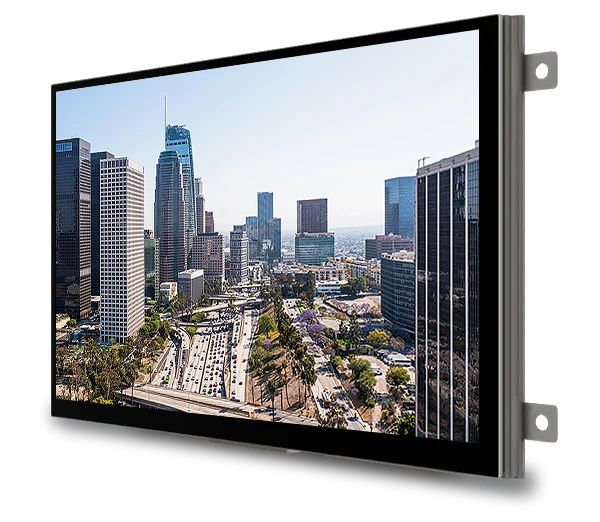
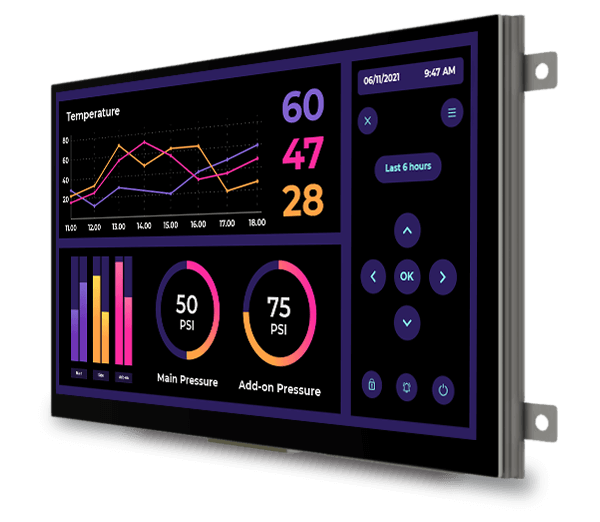
STM32 Embedded Displays combine a high-brightness, full-viewing-angles IPS TFT LCD panel with STM32 microcontroller, memory, and I/O in a single module. You work with a ready-to-program platform reducing the risks of integrating a display, MCU, and interface separately.
Currency:
-

1.54” STM32 Nucleo 64 Display Kit WBA65RI
$28.40 -
1.54” STM32 Nucleo 64 Display Kit
$28.40 -
3.5” STM32 Nucleo 144 Display Kit
$41.29 -
STM32 Embedded Display – Capacitive Touch Panel – Optical bonding – 12.1-inch TFT LCD screen – RVT121HVSNWC00-B
$334.01 -
STM32 Embedded Display – Capacitive Touch Panel – Optical bonding – 12.1-inch TFT LCD screen – RVT121HVSFWCA0-B
$340.12 -
STM32 Embedded Display – Capacitive Touch Panel – Optical bonding – 12.1-inch TFT LCD screen – RVT121HVSNWCA0-B
$331.30 -
STM32 Embedded Display – 12.1-inch TFT LCD screen – RVT121HVSFWN00
$284.31 -
STM32 Embedded Display – 12.1-inch TFT LCD screen – RVT121HVSNWN00
$275.50 -
STM32 Embedded Display – Capacitive Touch Panel – Optical bonding – 10.1-inch TFT LCD screen – RVT101HVSNWC00-B
$298.94 -
STM32 Embedded Display – Capacitive Touch Panel – Air bonding – 10.1-inch TFT LCD screen – RVT101HVSNWC00
$279.30 -
STM32 Embedded Display – Capacitive Touch Panel – Air bonding – 10.1-inch TFT LCD screen – RVT101HVSFWCA0
$284.19 -
STM32 Embedded Display – Capacitive Touch Panel – Air bonding – 10.1-inch TFT LCD screen – RVT101HVSNWCA0
$277.04 -
STM32 Embedded Display – 10.1-inch TFT LCD screen – RVT101HVSFWN00
$242.83 -
STM32 Embedded Display – 10.1-inch TFT LCD screen – RVT101HVSNWN00
$235.69 -
STM32 Embedded Display – Capacitive Touch Panel – Optical bonding – 7-inch TFT LCD screen – RVT70HSSNWC00-B
$228.36 -
STM32 Embedded Display – Capacitive Touch Panel – Air bonding – 7-inch TFT LCD screen – RVT70HSSNWC00
$209.29 -
STM32 Embedded Display – Capacitive Touch Panel – Air bonding – 7-inch TFT LCD screen – RVT70HSSFWCA0
$208.99 -
STM32 Embedded Display – Capacitive Touch Panel – Air bonding – 7-inch TFT LCD screen – RVT70HSSNWCA0
$206.86
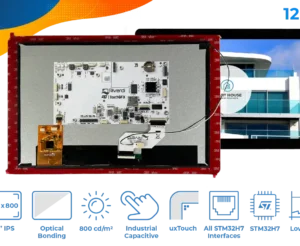
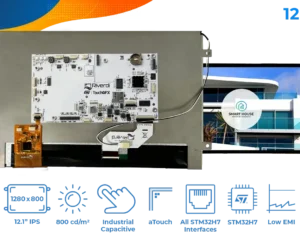
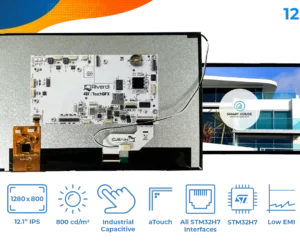
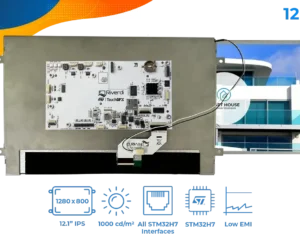


Read the full engineering introduction to STM32 Embedded Displays Series.
What are STM32 Embedded Displays?
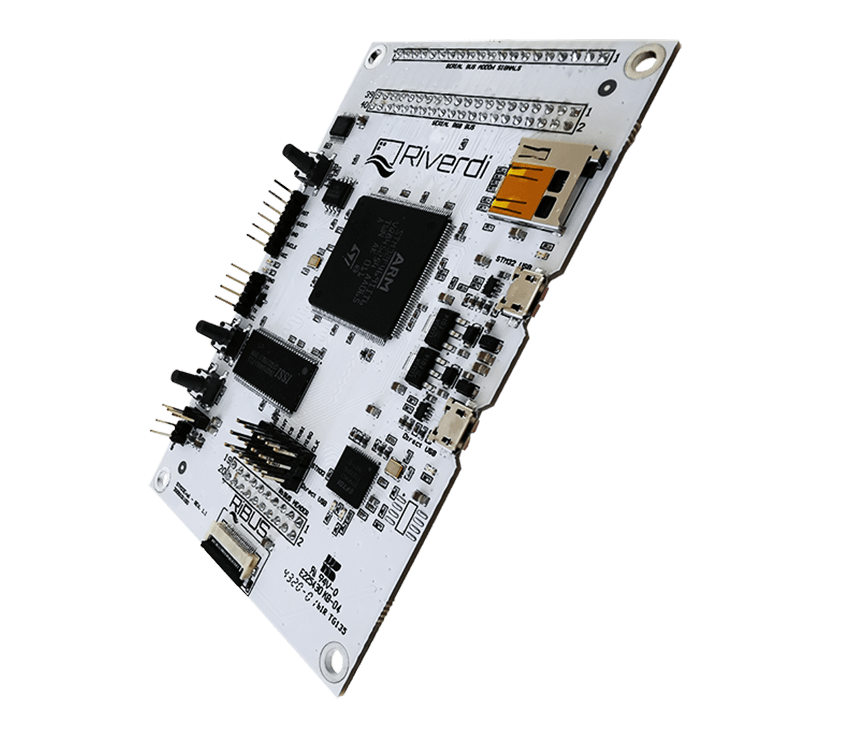
Each module integrates an STM32 MCU on the display board. The STM32H7 series uses a dual-core Cortex M7/M4 architecture. For low-power applications you can use the STM32U5 series with a Cortex-M33 and NeoChromVG graphics accelerator.
The display architecture allows it to run your application locally. GUI, touch, and communication interfaces are handled on-board, with no external host processor needed. There is also no separate video source to manage, as with HDMI or USB-C displays. In EVE-based setups rendering depends on commands from the host, while STM32 handles it on the module.
As a part of the STM32 ecosystem, these displays work directly with TouchGFX and include ready-to-use demo projects They can also function as dual-display setups. See our guide on controlling two displays with STM32H7 and how to get started with the STM32 family using TouchGFX.
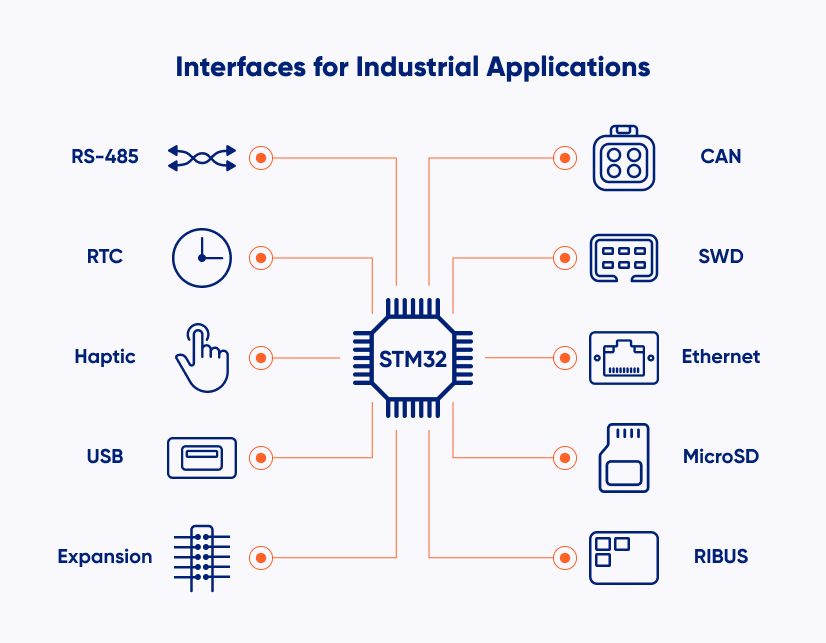
Features of STM32 Embedded Displays
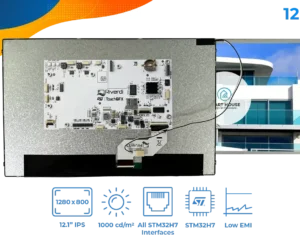
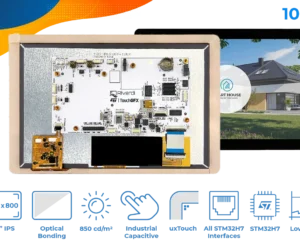
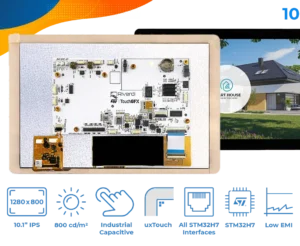
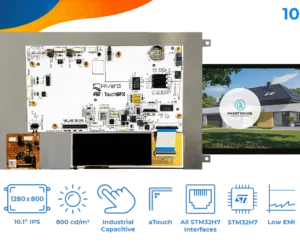
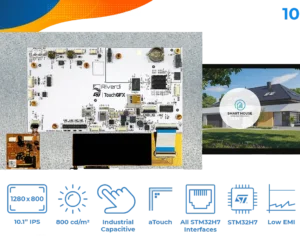
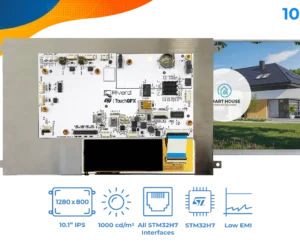
The STM32H7 series reaches 1280×800 resolution, the highest available for MCU-based displays. Both the H7 and U5 series offer brightness from 850 up to 1000 cd/m2 (or more for customized solutions)
Equipped only with industrial-grade components, the displays come with multiple sizes and variants. You can select the projected capacitive touch panel and tune the display for glove operation in demanding environments. Further alternatives include optical or air bonding, frame or frameless construction, and two integration approaches: uxTouch or aTouch.
uxTouch panel is a standard for new designs. Slightly larger than the screen, it is mounted on top of the enclosure to create a flat front surface. aTouch is suitable for upgrading existing designs. It is installed from the inside, matching the display size and fitting standard cutouts. Both panels offer ion-exchange strengthened glass, multi-touch, and straightforward integration.
Operating temperature from -20°C to +70°C guarantees stable performance. Customization options enable engineers to modify the PCB, add mechanical housing, or adjust brightness and cover glass. With power, communication, and GPIO already integrated, you avoid designing a separate carrier and interface board. See how to expand your system easily by connecting a daughterboard to the STM32 40-pin expansion connector.
All full-size models come with RiBUS, one universal connector for all Riverdi display families. So you can switch between variants without redesigning the wiring.
As Tomasz Soldat, Riverdi CTO, sums it up: “More control over performance, less complexity and lower memory usage. We see a clear shift toward this kind of architecture. Each year, together with ST, we extend the STM32 ecosystem with larger displays and RAM, including the upcoming N6 module.”
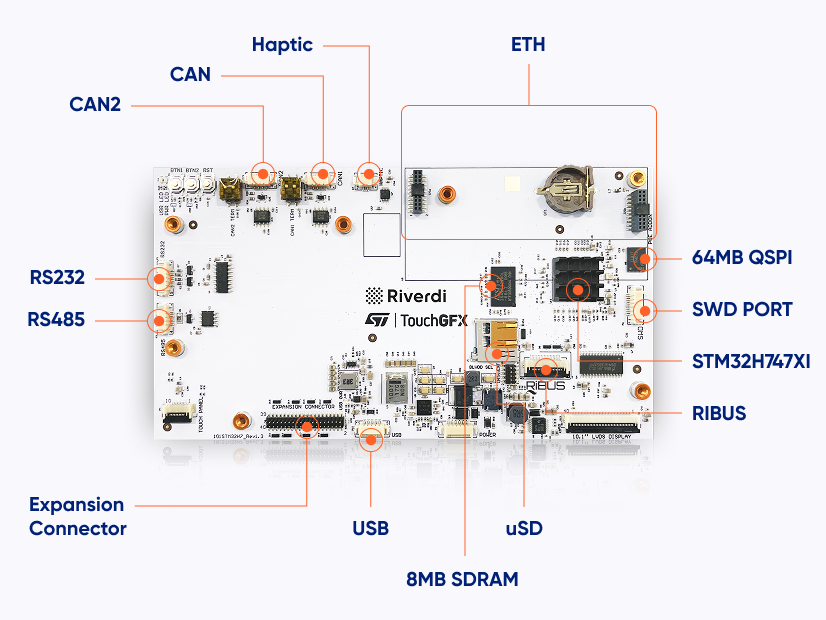
Uses of STM32 Embedded Displays
Whenever logic and interface need to run locally.
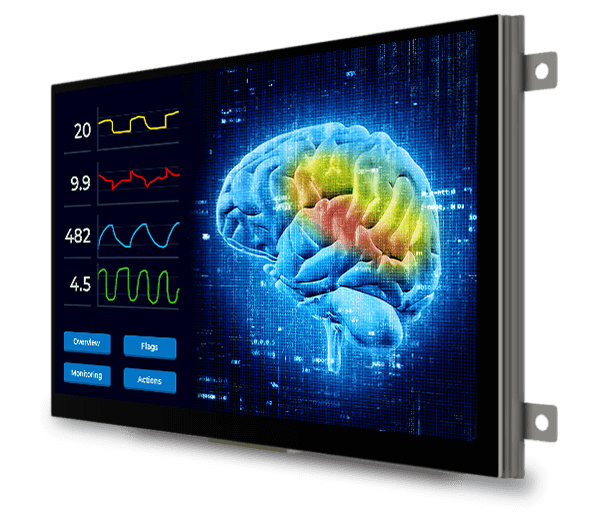
Specifically, HMI panels in production lines and SCADA systems often use 7” to 12.1” displays. EV charging stations require high brightness PCAP 7” to 10.1” screens for outdoor readability. Medical monitors and lab instruments rely on 10.1” or 12.1” for data display and control. Home and elevator control panels work well with the low power 5” STM32U5.
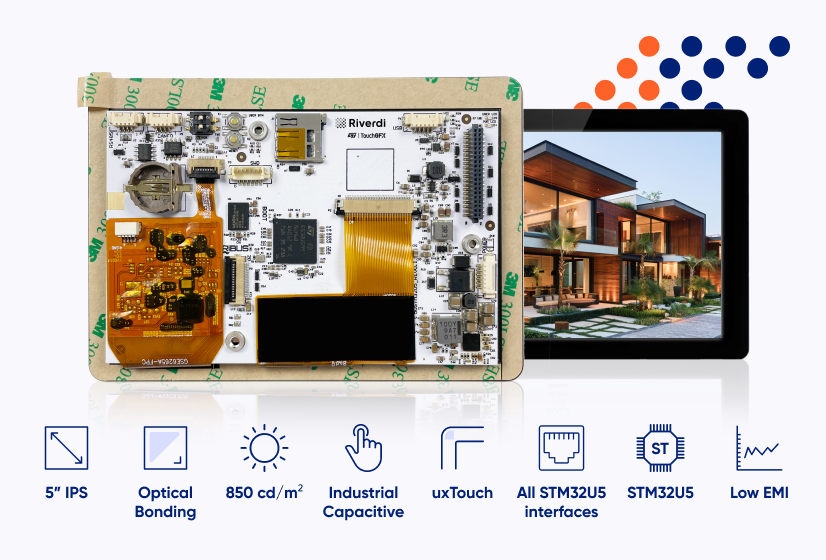
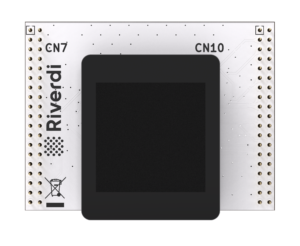
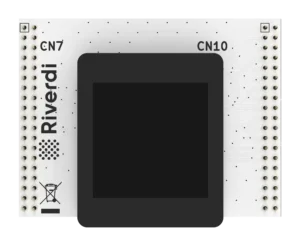
For early development, engineers use 144-pin 3.5” or 64-pin 1.54” Nucleo kit to build a proof of concept. See how to get started with these displays, also supporting IoT sensors and their wireless use (compatible with the Nucleo-WBA65RI).
Riverdi STM32 Embedded Display Manufacturer
Riverdi builds its most powerful intelligent displays in Europe as an STMicroelectronics Authorized Partner. Over 5 years of their collaboration ensures compatibility with STM32 and TouchGFX tools.
The company has been operating since 2012. It uses industrial-grade components with long-term availability and its own in-house optical bonding technology.
All their standard products are available without MOQ through DigiKey, Mouser, RS, and TME. Riverdi’s engineering team directly supports you throughout customization and every stage of integration.