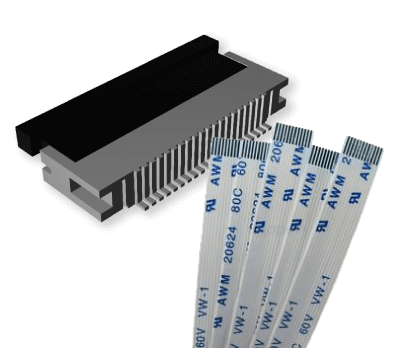
RGB displays
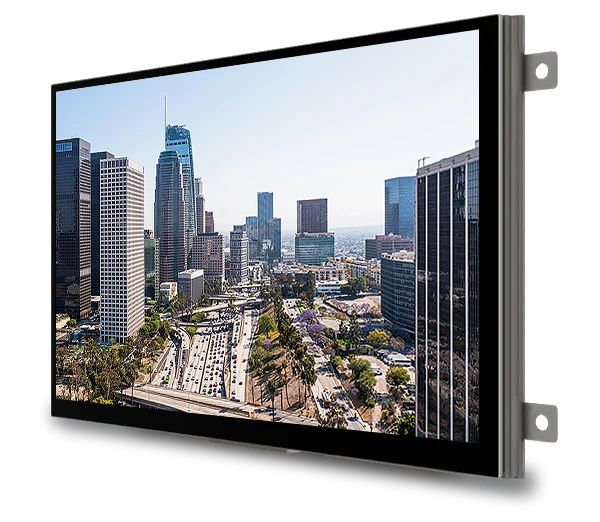
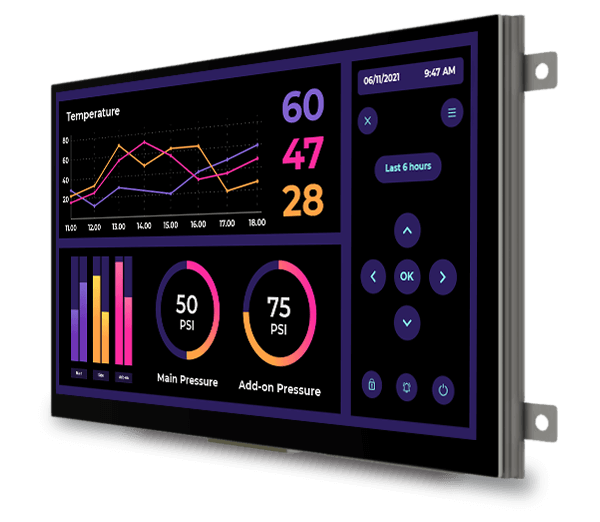
Riverdi RGB displays are 5″ to 7″ High Brightness IPS TFT modules for MCU- and graphics-controller-based designs. The category covers resolutions up to 1024×600 and brightness up to 1000 cd/m², with a parallel RGB interface for short, direct display connection.
Currency:
-

High Brightness IPS display 3.5″ TFT LCD 320x480px, RGB and SPI interface display – RVT35HITNWN00
$18.60 -

High Brightness IPS display 3.5″ TFT LCD 320x480px, RGB and SPI interface display + Capacitive touchscreen – RVT35HITNWC00-B
$28.49 -
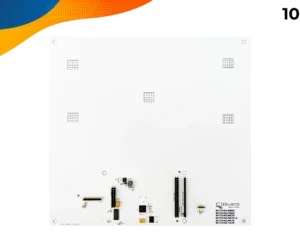
Don Addon 101 LVDS
$49.00 -
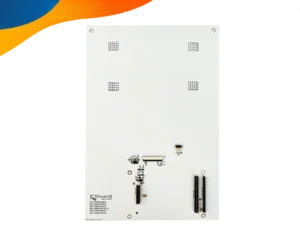
Don Addon 7 RGB
$29.00 -
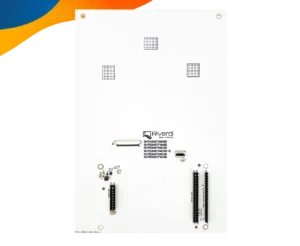
Don Addon 5 RGB
$29.00 -
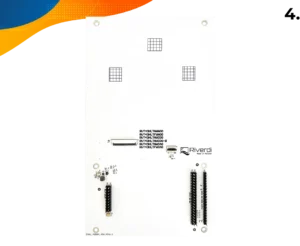
Don Addon 43 RGB
$29.00 -
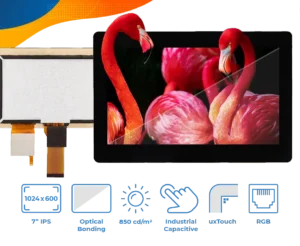
High Brightness IPS display 7.0″ TFT LCD 1024x600px, RGB interface + Capacitive touchscreen – RVT70HSTNWC00-B
$99.98 -
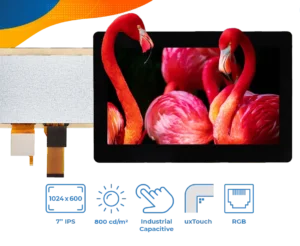
High Brightness IPS display 7.0″ TFT LCD 1024x600px, RGB interface + Capacitive touchscreen – RVT70HSTNWC00
$79.48 -
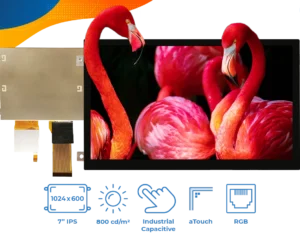
High Brightness IPS display 7.0″ TFT LCD 1024x600px, RGB interface + Capacitive touchscreen – RVT70HSTFWCA0
$79.22 -
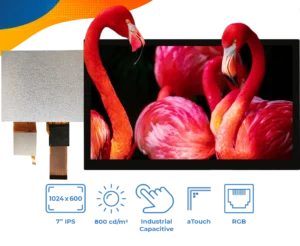
High Brightness IPS display 7.0″ TFT LCD 1024x600px, RGB interface + Capacitive touchscreen – RVT70HSTNWCA0
$76.82 -

High Brightness IPS display 7.0″ TFT LCD 1024x600px, RGB interface – RVT70HSTFWN00
$44.99 -

High Brightness IPS display 7.0″ TFT LCD 1024x600px, RGB interface – RVT70HSTNWN00
$42.60 -

High Brightness IPS display 5.0″ TFT LCD 800x480px, RGB interface + Capacitive touchscreen – RVT50HQTNWC00-B
$72.53 -

High Brightness IPS display 5.0″ TFT LCD 800x480px, RGB interface + Capacitive touchscreen – RVT50HQTNWC00
$64.03 -

High Brightness IPS display 5.0″ TFT LCD 800x480px, RGB interface + Capacitive touchscreen – RVT50HQTFWCA0
$65.07 -

High Brightness IPS display 5.0″ TFT LCD 800x480px, RGB interface + Capacitive touchscreen – RVT50HQTNWCA0
$61.97 -

High Brightness IPS display 5.0″ TFT LCD 800x480px, RGB interface – RVT50HQTFWN00
$33.86 -

High Brightness IPS display 5.0″ TFT LCD 800x480px, RGB interface – RVT50HQTNWN00
$30.77
What are RGB displays?
An RGB display is a TFT LCD module driven through a parallel RGB video bus, where pixel data is sent directly from the MCU or graphics controller to the panel. It is used where the controller, PCB routing and mechanical layout allow a short parallel connection to the TFT.
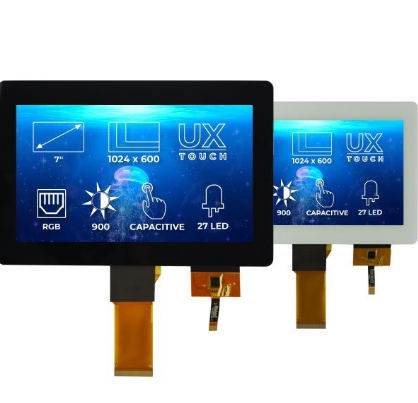
A standard RGB LCD has no display-side frame buffer or command engine. That keeps the module architecture simple, but puts timing, memory bandwidth and refresh control on the host side.
The main difference from LVDS and MIPI DSI is the physical layer. LVDS serializes the signal and works better over longer cable runs. MIPI DSI uses high-speed differential lanes and fits higher resolutions or compact mobile-style routing. RGB uses more wires, but it is easier to bring up and debug.
For a quick comparison of RGB, LVDS, MIPI DSI and other display interfaces, watch the YouTube explanation by Kamil Kozłowski, Board Member and Technical Advisor at Riverdi.
Advantages of RGB displays
Display refresh and timing are tied to the hardware clock, reducing latency variations or jitter in the video path. For embedded HMIs, instrumentation and control panels, this is often enough. You do not pay the complexity cost of MIPI DSI when the resolution and cable length do not require it.
If the MCU has an RGB display controller, you can route the bus directly to the panel, reducing BOM cost.
As Tomasz Soldat, Riverdi CTO, puts it: “I would choose RGB when the display is close to the controller and the controller already has the timing unit for it. If the cable gets longer, LVDS are safer. If bandwidth becomes the limit, MIPI DSI is the next option.”
Common uses for RGB displays
MCU-driven industrial HMI panels use 5″ to 7″ RGB displays when the screen and control electronics are kept in one enclosure.
Compact control panels in machine controllers, access systems, HVAC panels and device front panels usually choose RGB because the PCB position, FFC length and housing depth allow a parallel connection without an added bridge. Instrumentation follows the same logic: if the display path is local, RGB keeps the interface direct.
In IoT devices with a dedicated MCU, RGB is practical when memory bandwidth is available and the product does not need Linux, HDMI or a separate graphics subsystem.
Riverdi RGB display manufacturer
Riverdi has designed and built TFT display modules in Poland since 2012. RGB is one of the interface options inside Riverdi’s wider TFT display portfolio, so projects with different controller, brightness, touch and mechanical requirements can stay with one stable European supplier instead of restarting display sourcing for every variant. If RGB stops making sense because of cable length or bandwidth, compare this category with LVDS displays or MIPI DSI.
For long-lifecycle industrial products, Riverdi provides a 10+ year component longevity. Standard RGB displays are available without MOQ and can be sourced through TME, RS Components, Mouser and DigiKey.
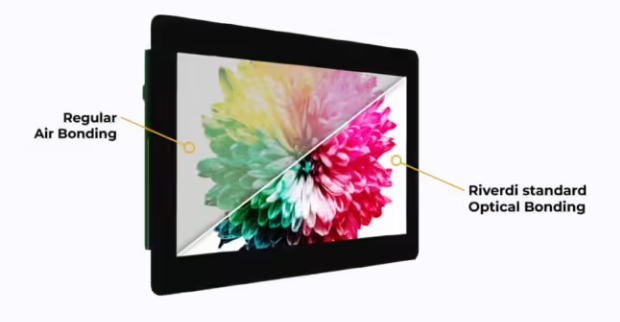
The company runs the optical bonding process in-house. Having this capability on-site ensures full control over the display’s optical performance. When the standard RGB module is not enough, Riverdi engineering team handles customized solutions such as brightness, mechanics, interface details, cover glass, bonding, or housing changes.