USB-C Displays
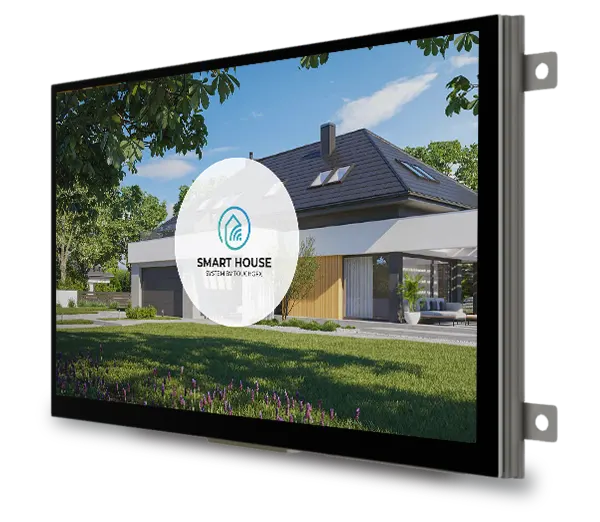
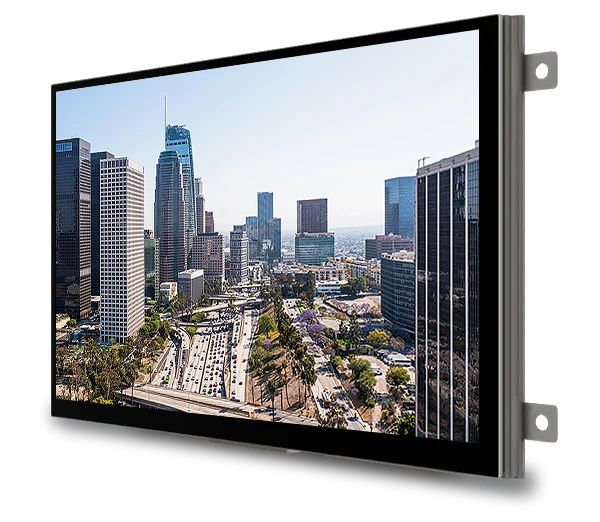
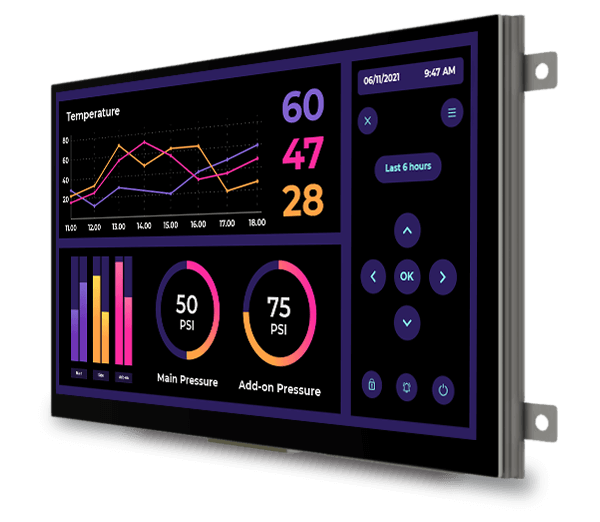
USB-C displays reduce industrial monitor integration to one cable. Video, touch, 5V power and backlight PWM control run through a single reversible USB-C connector, while the module works as a plug-and-play IPS TFT monitor.
Currency:
-

Plug and play display 12.1″ TFT LCD 1280x800px, USB-C interface – RVT121HVUFWN00
$253.33 -
Plug and play display 12.1″ TFT LCD 1280x800px, USB-C interface + Capacitive touchscreen – RVT121HVUNWC00-B
$311.87 -
Plug and play display 12.1″ TFT LCD 1280x800px, USB-C interface + Capacitive touchscreen – RVT121HVUNWCA0-B
$309.24 -
Plug and play display 12.1″ TFT LCD 1280x800px, USB-C interface – RVT121HVUNWN00
$243.21 -
Plug and play display 12.1″ TFT LCD 1280x800px, USB-C interface + Capacitive touchscreen – RVT121HVUFWCA0-B
$316.85 -
Plug and play display 10.1″ TFT LCD 1280x800px, USB-C interface – RVT101HVUNWN00
$198.36 -
Plug and play display 10.1″ TFT LCD 1280x800px, USB-C interface – RVT101HVUFWN00
$200.48 -
Plug and play display 10.1″ TFT LCD 1280x800px, USB-C interface + Capacitive touchscreen – RVT101HVUNWC00-B
$262.61 -
Plug and play display 10.1″ TFT LCD 1280x800px, USB-C interface + Capacitive touchscreen – RVT101HVUNWC00
$245.04 -
Plug and play display 10.1″ TFT LCD 1280x800px, USB-C interface + Capacitive touchscreen – RVT101HVUNWCA0
$243.71 -
Plug and play display 10.1″ TFT LCD 1280x800px, USB-C interface + Capacitive touchscreen – RVT101HVUFWCA0
$250.49




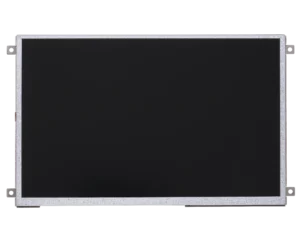


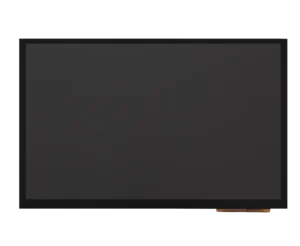
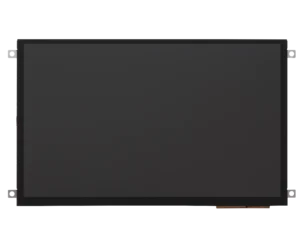
What are USB-C displays?
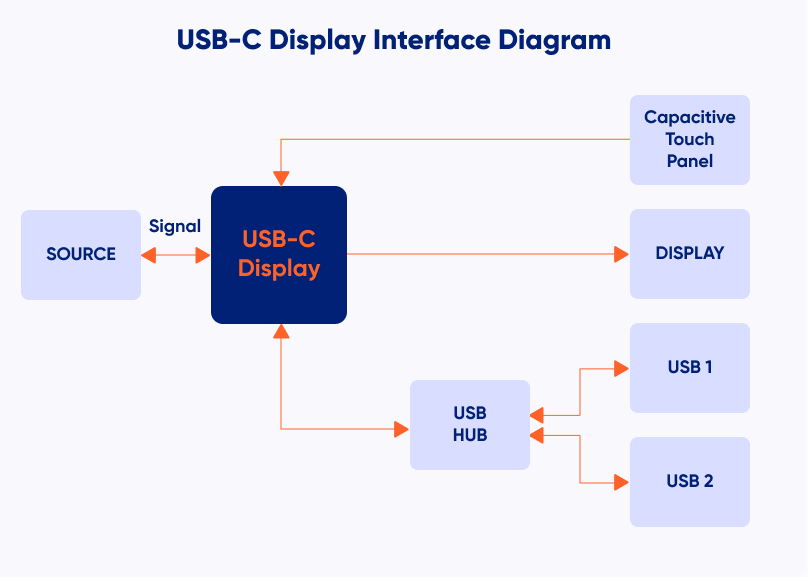
USB-C displays work as standard Plug and Play monitors connected to the host system. The host sends the image, the display reports touch through USB, and power is supplied through the same connection.
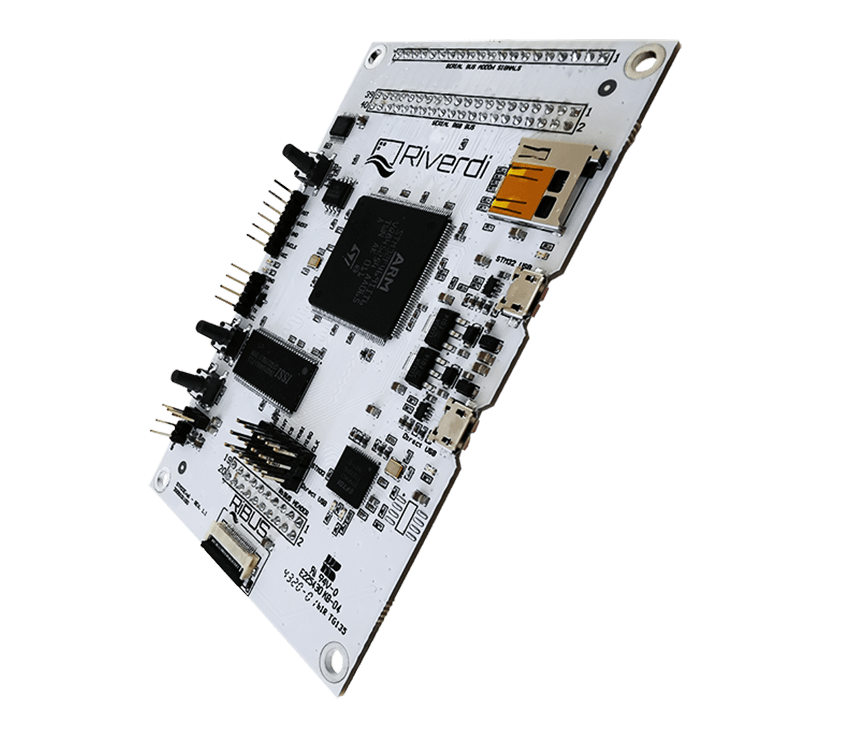
This is where they differ from STM32 and EVE displays. STM32 runs the application on the display board. EVE builds the GUI from host MCU commands. USB-C displays work simply: the host generates the image, the display shows it.
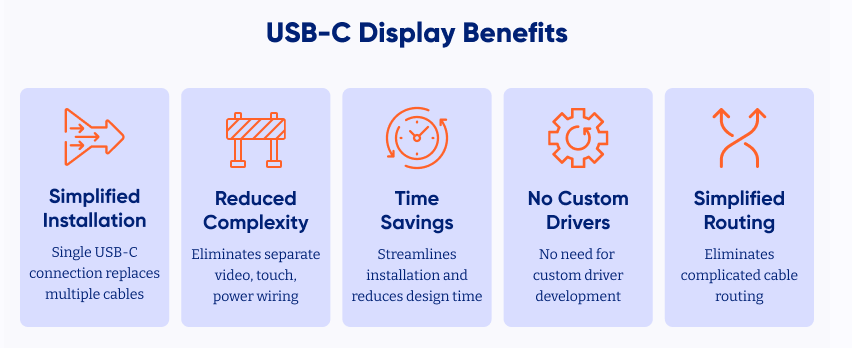
The main difference from HDMI displays is integration. HDMI needs 3 separate lines – for video, touch and power – but remains the safer choice for older devices. With USB-C, these signals go through one reversible 24-pin connector. It means less cable routing and fewer fixing points.
As Tomasz Soldat, Riverdi CTO, says: “Engineers should not lose time on cabling when the display is not the development problem. With USB-C, we reduced three connections to one and kept the industrial display parameters.”
Features of USB-C displays
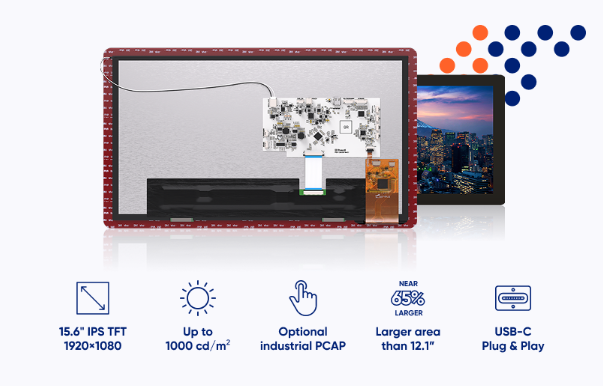
The display sizes range from 7″, 10.1″, and 12.1″ (15.6″ version is currently under development). Resolution reaches 1280×800 px, brightness up to 1000 cd/m². The panels use IPS technology, so viewing angles remain stable in horizontal and vertical mounting.
One USB-C cable carries video, PCAP touch, 5V power and backlight PWM control. The reversible connector also removes a small but irritating assembly issue: plug orientation.
Touch options include industrial projected capacitive touch or no-touch variants. Depending on the product, the display can use air bonding or optical bonding. Optical bonding helps where reflection, perceived contrast and front-glass behavior affect readability.
A useful differentiator is the internal USB hub. Two free expansion slots can be used for peripherals such as a keyboard, mouse or USB storage device. In a kiosk, service terminal or diagnostic station, the display can become the front USB access point instead of only a screen.
Applications of USB-C displays
USB-C Displays fit rapid prototyping when you need to test size, brightness, mounting and touch behavior without preparing a separate display interface. One cable is enough to start evaluating the GUI on a 7″, 10.1″ or 12.1″ industrial panel.
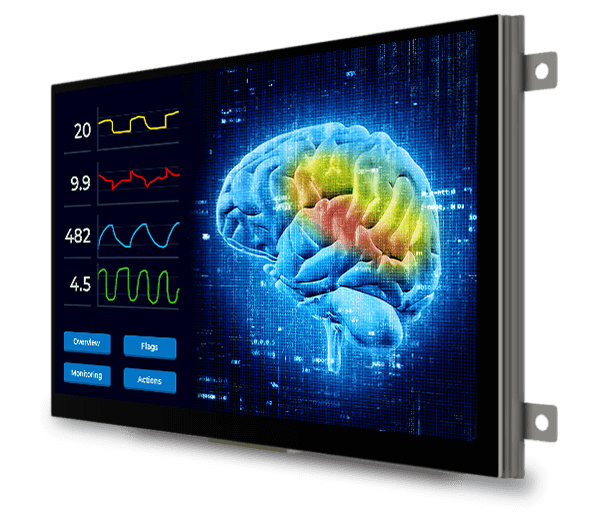
Machine status, diagnostics, and process values from an existing controller can be routed directly to 10.1″ or 12.1″ industrial secondary monitors. Medical workstations use these USB-C modules purely as auxiliary interfaces for measurement previews or operator input.
For the front panels of kiosks and POS devices, a 10.1″ USB-C touch display is a common choice.
Where cable routing and sealed fronts limit the allowable connector count – like in EV chargers or outdoor terminals – high-brightness USB-C variants become the right choice.
Riverdi USB-C display manufacturer
Riverdi has designed and manufactured display modules in Europe since 2012. In USB-C projects, this means fast monitor integration without display firmware work, but in an industrial PCAP format instead of a consumer monitor forced into a machine.
The company plans products around 10+ years of component availability and performs optical bonding in-house. Standard USB-C displays are available without MOQ through DigiKey, Mouser, RS Components and TME. Engineers can order one unit for bench tests, a small batch for pilot builds and keep the same global sourcing path when the project moves toward production.
If the standard USB-C module needs a different cover glass, bonding type, brightness level, mechanics, PCB or housing, the engineering team handles it through customized solutions.