SPI / QSPI displays
SPI / QSPI displays use a serial interface between the host MCU and the display controller. In Riverdi modules, this interface is mainly used with EVE intelligent displays, where the host sends commands over SPI or QSPI instead of driving a full video stream. The category covers sizes from 1.54″ to 15.6″.
Currency:
-
Intelligent display 15.6″ TFT LCD Full HD 1920x1080px, EVE5 BT820B – RVT156HKBNWN00
$337.44 -
Intelligent display 15.6″ TFT LCD Full HD 1920x1080px, EVE5 BT820B – RVT156HKBFWN00
$370.01 -
Intelligent display 15.6″ TFT LCD Full HD 1920x1080px, EVE5 BT820B + Capacitive touchscreen – RVT156HKBNWCA0-B
$460.46 -

Intelligent display 15.6″ TFT LCD Full HD 1920x1080px, EVE5 BT820B + Capacitive touchscreen – RVT156HKBNWC00-B
$464.38 -

Intelligent display 15.6″ TFT LCD Full HD 1920x1080px, EVE5 BT820B + Capacitive touchscreen – RVT156HKBFWCA0-B
$489.55 -

High Brightness IPS display 3.5″ TFT LCD 320x480px, RGB and SPI interface display – RVT35HITNWN00
$18.60 -

High Brightness IPS display 3.5″ TFT LCD 320x480px, RGB and SPI interface display + Capacitive touchscreen – RVT35HITNWC00-B
$28.49 -

High Brightness IPS display 1.54″ TFT LCD 240x240px, SPI interface display + Capacitive touchscreen – RVT15MDTNWC00-B
$17.69 -
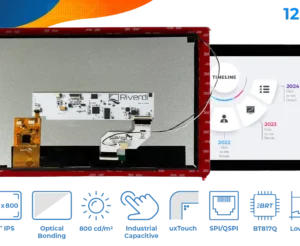
Intelligent display 12.1″ TFT LCD 1280x800px, EVE4 BT817Q + Capacitive touchscreen – RVT121HVBNWC00-B
$256.01 -
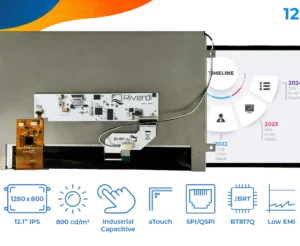
Intelligent display 12.1″ TFT LCD 1280x800px, EVE4 BT817Q + Capacitive touchscreen – RVT121HVBFWCA0-B
$262.78 -
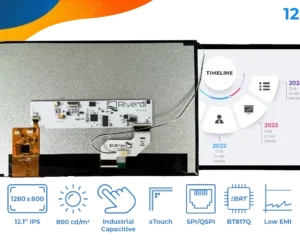
Intelligent display 12.1″ TFT LCD 1280x800px, EVE4 BT817Q + Capacitive touchscreen – RVT121HVBNWCA0-B
$253.11 -
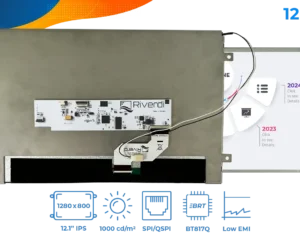
Intelligent display 12.1″ TFT LCD 1280x800px, EVE4 BT817Q – RVT121HVBFWN00
$202.46 -
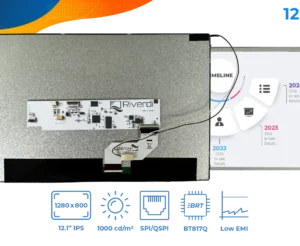
Intelligent display 12.1″ TFT LCD 1280x800px, EVE4 BT817Q – RVT121HVBNWN00
$192.79 -

Intelligent display 10.1″ TFT LCD 1280x800px, EVE4 BT817Q + Capacitive touchscreen – RVT101HVBNWC00-B
$218.64 -
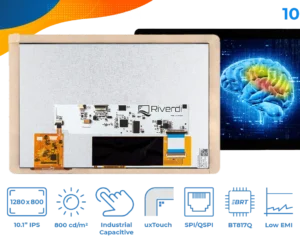
Intelligent display 10.1″ TFT LCD 1280x800px, EVE4 BT817Q + Capacitive touchscreen – RVT101HVBNWC00
$198.59 -
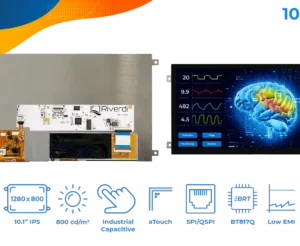
Intelligent display 10.1″ TFT LCD 1280x800px, EVE4 BT817Q + Capacitive touchscreen – RVT101HVBFWCA0
$204.17 -

Intelligent display 10.1″ TFT LCD 1280x800px, EVE4 BT817Q + Capacitive touchscreen – RVT101HVBNWCA0
$196.18 -
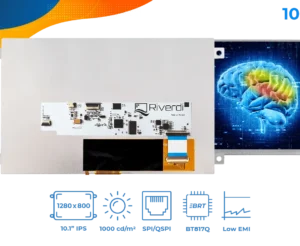
Intelligent display 10.1″ TFT LCD 1280x800px, EVE4 BT817Q – RVT101HVBFWN00
$158.23
What are SPI / QSPI displays?
Those displays use a serial host interface between the MCU and the display controller. They fit designs where GPIO count, PCB routing or connector space makes a wide RGB bus impractical. SPI keeps the host connection to roughly 4–6 pins; QSPI adds four data lines, giving 4x the data width of standard SPI.
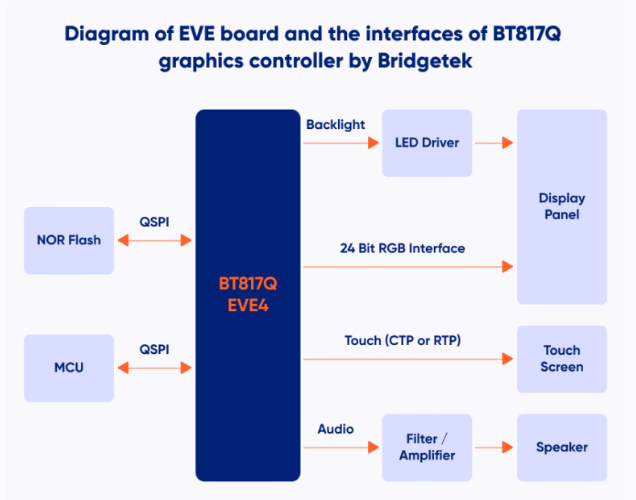
In Riverdi EVE-based modules, the MCU sends commands and assets over SPI/QSPI, while the EVE controller renders the GUI locally.
Riverdi develops these modules with Bridgetek, the manufacturer of EVE graphics controllers. As Tomasz Soldat, Riverdi CTO, emphasizes: “When you have only a few pins available and still need a full GUI, EVE over SPI/QSPI is usually the simplest path.”
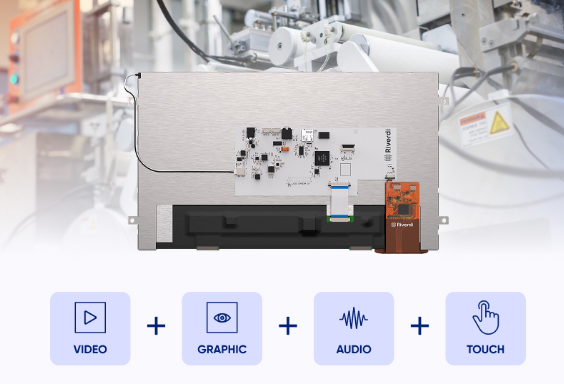
SPI is faster than I²C displays and supports full-duplex communication, but I²C uses only two pins, so it saves wiring at the cost of lower throughput. For a closer comparison of SPI with I²C, watch the short video by Kamil Kozłowski, Board Member and Technical Advisor at Riverdi.
Features of SPI / QSPI displays
Riverdi SPI/QSPI displays include production-ready intelligent displays EVE4 BT817Q modules, EVE3 BT81x modules and selected STM32 Nucleo display kits for early firmware work.
EVE3 BT81x modules are used for simpler HMI designs, WVGA-class resolutions and upgrades where the existing MCU should stay in place. They are available with BT815 or BT816 controllers, depending on the touch technology and project requirements. EVE4 BT817Q modules keep the same host-display architecture, but add QSPI support for higher data throughput and larger GUI projects. For Full HD designs, see EVE5 BT820B: compared with EVE4, it raises resolution 2.4x.
Applications for SPI / QSPI displays
Use SPI/QSPI when the MCU has to keep the control logic, but cannot spend pins or memory bandwidth on a full video interface. For wide application-level selection, see the guide to choosing EVE displays for industrial projects.
In MCU-driven HMI panels, all sizes from 1.54″ to 15.6″ can be used.
Small IoT devices usually stay in the 1.54″ to 5″ range. For prototypes, engineers can start with 1.54″ or 3.5″ STM32 Nucleo display kits – that is enough to test SPI communication, touch behavior and GUI logic before selecting the final display.
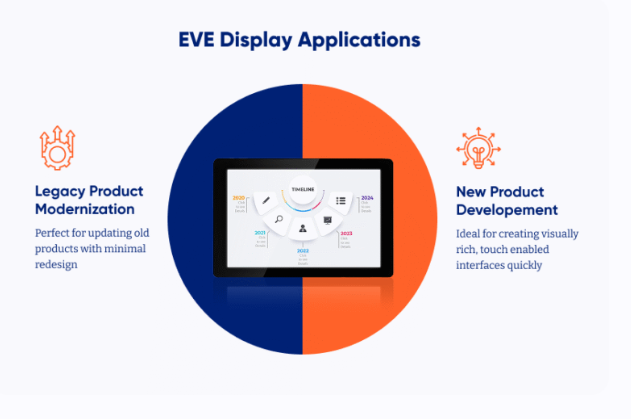
SPI/QSPI also works for cost-sensitive device upgrades. A legacy product can move from buttons, LEDs or a monochrome display to a touch GUI without rebuilding the whole platform.
Riverdi SPI / QSPI display manufacturer
Since 2012, Riverdi has designed and built TFT display modules in Europe. The company develops EVE-based SPI/QSPI displays in cooperation with Bridgetek, the manufacturer of EVE controllers.
Riverdi runs optical bonding in-house. It reduces the air gap between the LCD and touch panel, which cuts reflections and improves readability in sunlight.
Standard SPI/QSPI modules are available without MOQ, with global access through DigiKey, Mouser, RS Components and TME. When the standard range is not enough, Riverdi engineering team handles customized solutions. For long-lifecycle industrial products, the company plans component availability for 10+ years.
If you need high-performance graphics with maximum throughput, explore our full range of EVE4 modules. For WVGA interfaces, simpler HMIs or upgrades where the existing MCU should stay in place, check EVE3 displays.