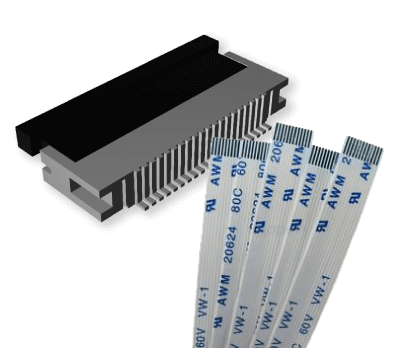
Intelligent displays
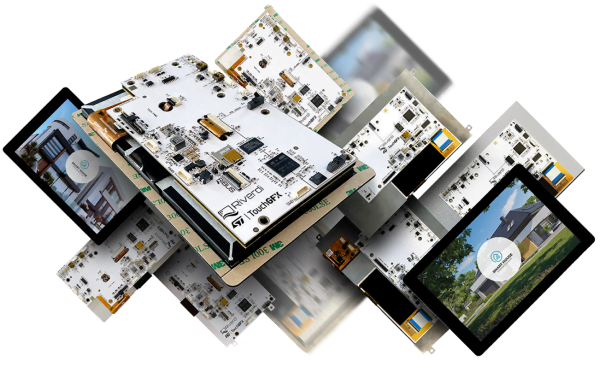
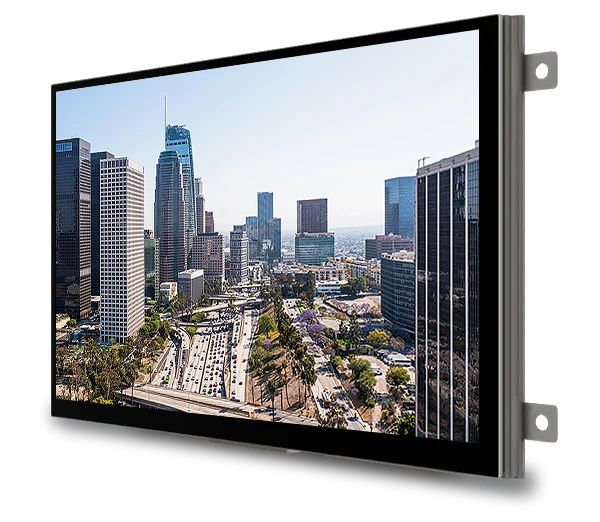
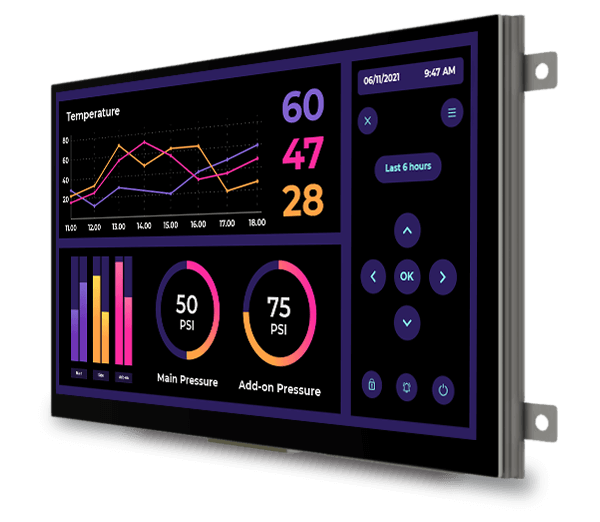
Riverdi intelligent displays are TFT modules with Bridgetek EVE graphics controllers: BT820B for EVE5, BT817Q for EVE4, BT815/BT816 for EVE3 and older FT80x/FT81x generations (sizes ranging from 3.5″ to 15.6″). The host MCU sends commands over SPI or QSPI. Graphics, touch and audio are processed directly on the display side.
Currency:
-

Intelligent display 15.6″ TFT LCD Full HD 1920x1080px, EVE5 BT820B – RVT156HKBNWN00
$337.44 -
Intelligent display 15.6″ TFT LCD Full HD 1920x1080px, EVE5 BT820B – RVT156HKBFWN00
$370.01 -
Intelligent display 15.6″ TFT LCD Full HD 1920x1080px, EVE5 BT820B + Capacitive touchscreen – RVT156HKBNWCA0-B
$460.46 -
Intelligent display 15.6″ TFT LCD Full HD 1920x1080px, EVE5 BT820B + Capacitive touchscreen – RVT156HKBNWC00-B
$464.38 -
Intelligent display 15.6″ TFT LCD Full HD 1920x1080px, EVE5 BT820B + Capacitive touchscreen – RVT156HKBFWCA0-B
$489.55 -
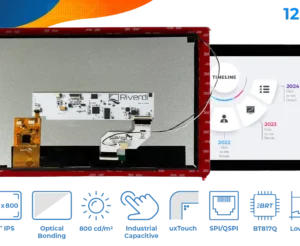
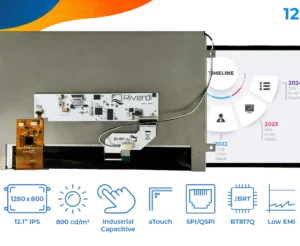
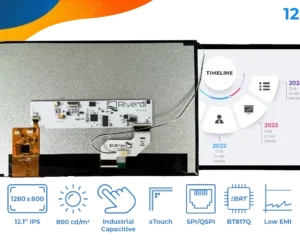
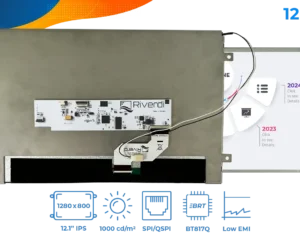
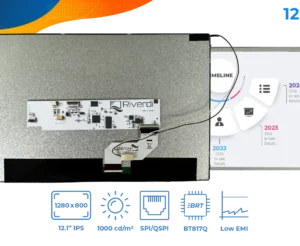
Intelligent display 12.1″ TFT LCD 1280x800px, EVE4 BT817Q + Capacitive touchscreen – RVT121HVBNWC00-B
$256.01 -
Intelligent display 12.1″ TFT LCD 1280x800px, EVE4 BT817Q + Capacitive touchscreen – RVT121HVBFWCA0-B
$262.78 -
Intelligent display 12.1″ TFT LCD 1280x800px, EVE4 BT817Q + Capacitive touchscreen – RVT121HVBNWCA0-B
$253.11 -
Intelligent display 12.1″ TFT LCD 1280x800px, EVE4 BT817Q – RVT121HVBFWN00
$202.46 -
Intelligent display 12.1″ TFT LCD 1280x800px, EVE4 BT817Q – RVT121HVBNWN00
$192.79 -
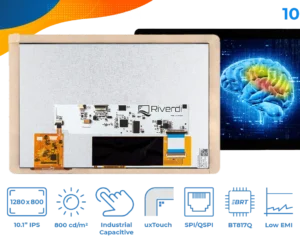
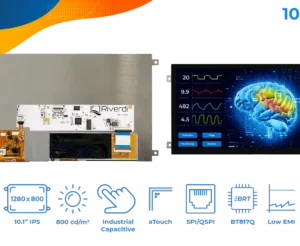
Intelligent display 10.1″ TFT LCD 1280x800px, EVE4 BT817Q + Capacitive touchscreen – RVT101HVBNWC00-B
$218.64 -
Intelligent display 10.1″ TFT LCD 1280x800px, EVE4 BT817Q + Capacitive touchscreen – RVT101HVBNWC00
$198.59 -
Intelligent display 10.1″ TFT LCD 1280x800px, EVE4 BT817Q + Capacitive touchscreen – RVT101HVBFWCA0
$204.17 -
Intelligent display 10.1″ TFT LCD 1280x800px, EVE4 BT817Q + Capacitive touchscreen – RVT101HVBNWCA0
$196.18 -
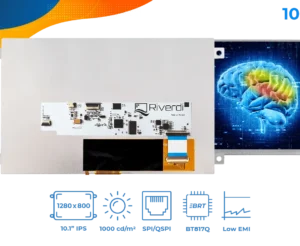
Intelligent display 10.1″ TFT LCD 1280x800px, EVE4 BT817Q – RVT101HVBFWN00
$158.23 -
Intelligent display 10.1″ TFT LCD 1280x800px, EVE4 BT817Q – RVT101HVBNWN00
$150.35 -
Intelligent display 7″ TFT LCD 1024x600px, EVE4 BT817Q + Capacitive touchscreen – RVT70HSBNWC00-B
$144.77 -
Intelligent display 7″ TFT LCD 1024x600px, EVE4 BT817Q + Capacitive touchscreen – RVT70HSBNWC00
$124.27






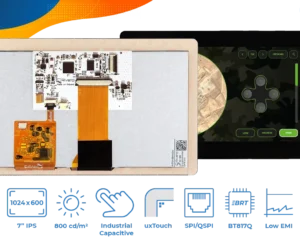
What are intelligent displays?
“Intelligent displays” is Riverdi’s name for display modules based on Bridgetek Embedded Video Engine technology. The architecture needs an external host MCU, but the MCU does not render the GUI pixel by pixel.
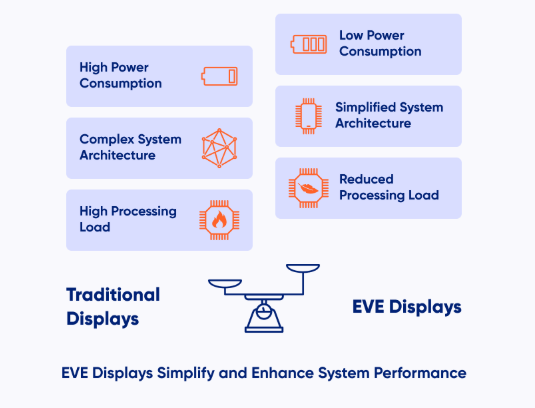
The host sends display lists, commands and asset references. The EVE controller generates the interface, reads touch input and can drive audio output. Even a small 8-bit or low-power MCU can control a graphical touch panel. This separates EVE displays from STM32 embedded displays, where the application runs on the display board, and from Plug and Play HDMI or USB-C displays, which only show an external video signal.
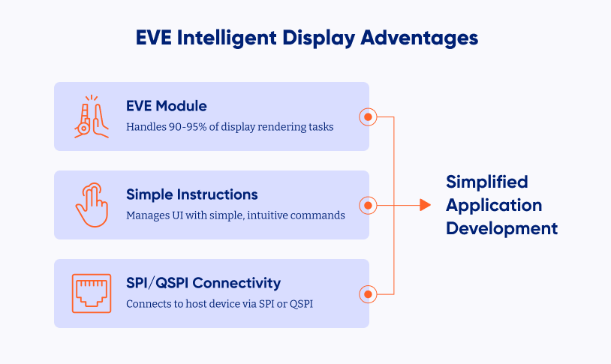
For the best understanding of how this architecture works and where its advantages come from, watch the 30-minute EVE4 presentation on YouTube by Kamil Kozłowski, Board Member & Technical Advisor at Riverdi.
Features of intelligent displays
Riverdi intelligent displays cover EVE generations from EVE1 to EVE5: FT800/FT801 and FT81x, BT815/BT816, BT817Q and BT820B. EVE4 supports modules up to 1280×800 px. EVE5 extends the same architecture to 15.6″ Full HD LVDS displays.
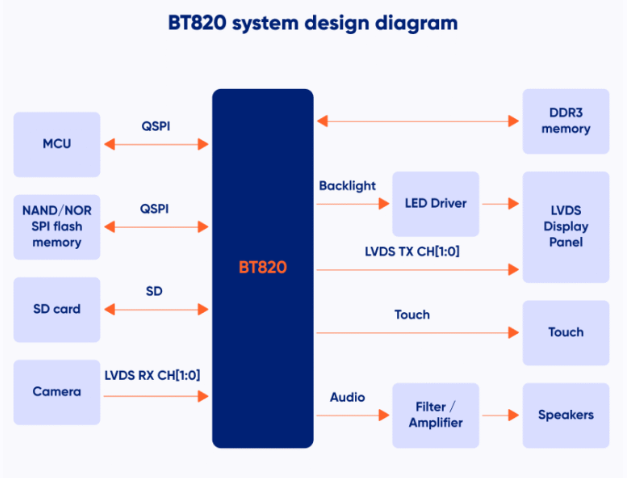
Communication runs through SPI or QSPI, so the host transfers commands, not full video frames. UI assets can be stored in display-side flash. EVE3+ and newer generations support ASTC compression. EVE5 adds DDR3 SDRAM and a frame buffer for larger layouts and higher resolutions.
Touch variants include projected capacitive and resistive panels. PCAP fits multi-touch HMIs with front glass, while resistive touch remains useful for pressure input, gloves and simple field operation. Built-in audio supports alarms and guided operation.
As Tomasz Soldat, Riverdi CTO, explains: “Across EVE3, EVE4 and EVE5, Bridgetek has pushed this architecture from compact embedded GUIs to large Full HD interfaces. Riverdi’s role is to turn that controller technology into display modules engineers can actually use in industrial production, with touch, memory, bonding and mechanics already solved.”
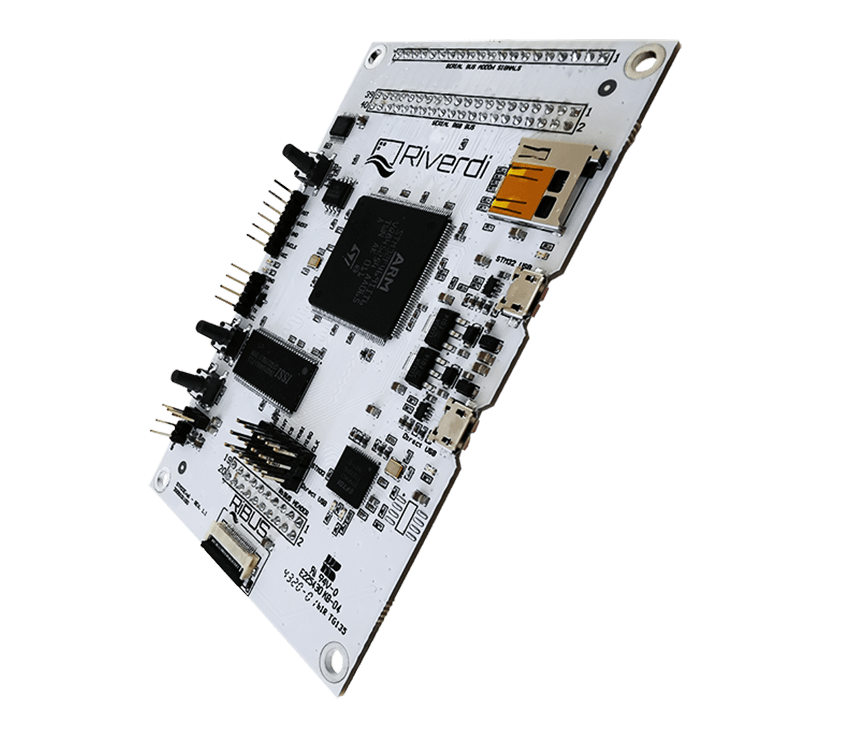
Full-size modules use RiBUS, Riverdi’s universal display connector. This helps when a project changes diagonal, moves from EVE3 to EVE4 or compares variants during prototyping, without redesigning the wiring from the beginning.
Applications of intelligent displays
Industrial HMI panels often use 5″ to 12.1″ EVE displays when the machine controller is already defined and the GUI should not force a processor redesign.
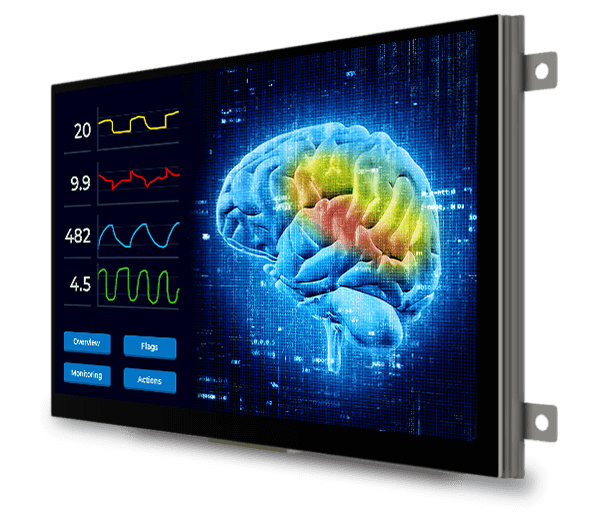
Medical and laboratory devices fit well in the 7″ to 12.1″ range. Vending machines, kiosks and payment terminals use 5″ to 10.1″ EVE displays for GUI, animation and audio feedback.
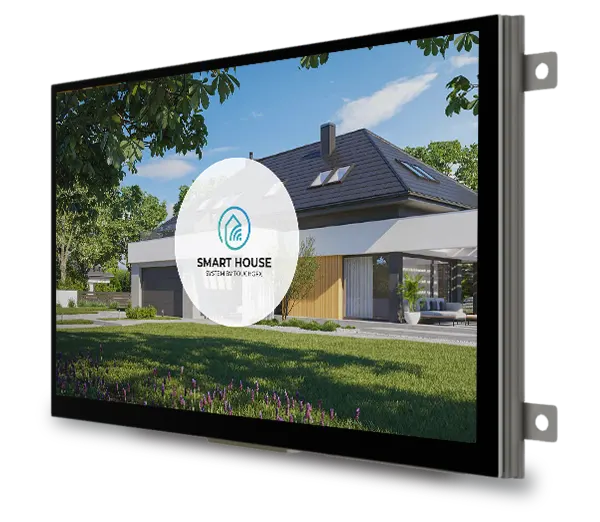
For applications like IoT panels, smart home controllers, and compact instruments, the design usually centers around a 3.5″ to 5″. If your device needs to operate outdoors or in harsh environments, you can tune this architecture by adding optical bonding, industrial PCAP, heavy-duty cover glass, and mechanical housing changes.
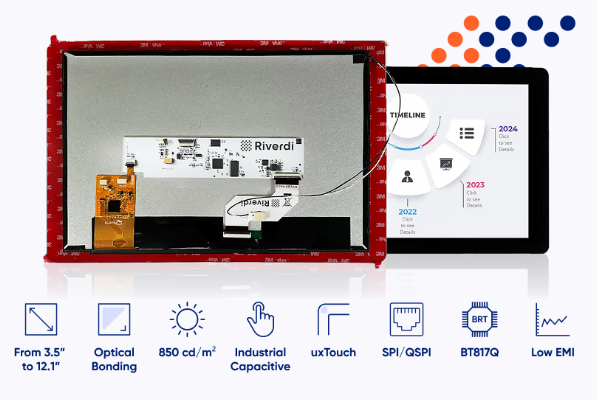
Riverdi intelligent display manufacturer
Riverdi has designed and manufactured TFT display modules in Europe, Poland since 2012. For EVE-based products, the company works with Bridgetek at engineering level, so controller selection, display architecture and integration support are handled as one design path, not as a late component choice.
The company designs these products for 10+ year component availability, so the display can stay serviceable and configurable after the first production run, instead of forcing a redesign when one controller or interface option disappears.
Riverdi also runs optical bonding in-house in Poland. The team controls the air gap removal, front-glass integration and mechanical stack inside one manufacturing process, which helps keep readability, touch behavior and mechanical fit consistent after integration.
Standard Intelligent Displays are available without MOQ and can be sourced globally through DigiKey, Mouser, RS Components and TME. When the standard version does not fit the enclosure, brightness target, cover glass, bonding stack, PCB or mechanics, Riverdi handles customized solutions without pushing the project back to a bare TFT display.