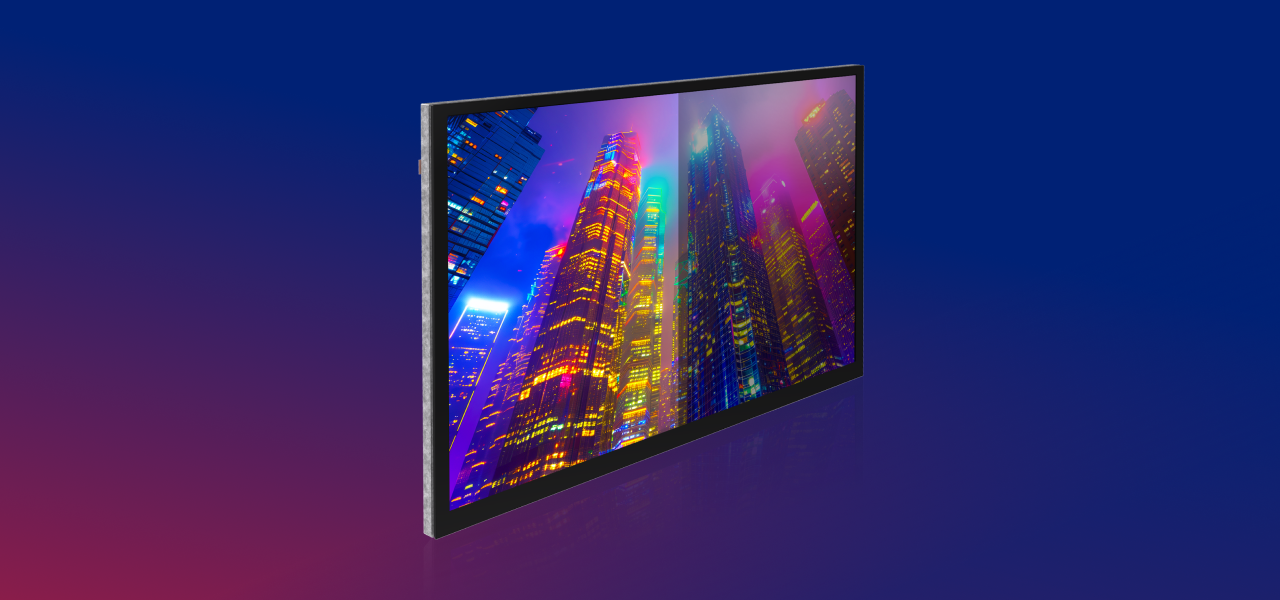
Brightness Enhancement Film (BEF) ist eine spezielle prismatische Folie, die in LCD-Displays verwendet wird, um die vom Benutzer wahrgenommene Helligkeit zu erhöhen. BEF fungiert als kontrolliertes “Lichttor”: Sie sammelt das gestreute Licht des Hintergrundbeleuchtungsmoduls und lenkt es auf den Betrachter, wodurch die Effizienz des gesamten optischen Systems verbessert wird. Dadurch kann die Helligkeit erhöht werden, ohne die Leistung der Hintergrundbeleuchtung zu erhöhen, was wiederum den Energieverbrauch senkt und die Geräteeffizienz verbessert.
Wirkungsmechanismus: prismatische Filme, Brechung und Reflexion
Das wichtigste Funktionselement von BEF ist eine Schicht aus Mikroprismen mit genau definierten Winkeln und Dichte.
- Brechung – wenn das Licht durch die Prismen fällt, ändert es seine Richtung und wird auf die Sichtachse konzentriert.
- Interne Reflexion – einige Strahlen werden umgelenkt und wieder nach vorne geschickt.
- Lichtkollimation – durch die Verringerung des Streuwinkels erscheint der Bildschirm für einen Betrachter, der sich direkt davor befindet, heller.
Zusammengenommen erhöhen diese Effekte die Menge des nützlichen Lichts, ohne die LED-Leistung zu erhöhen.
Helligkeitserhöhung: prozentualer Anstieg
In typischen Konfigurationen kann BEF die Helligkeit um 40% bis sogar 60% erhöhen, je nach Qualität der Hintergrundbeleuchtung und der Filmparameter.
Noch bessere Ergebnisse erzielen Sie mit DBEF (Dual Brightness Enhancement Film), einer Folie mit zwei Funktionen, die auch als lichtregenerierender Polarisator fungiert. DBEF kann die Helligkeit um 70 % bis 100 % verbessern, insbesondere bei High-End-Systemen, bei denen es auf maximale Energieeffizienz ankommt.
Struktur und Arten von BEF-Filmen
Komponenten-Ebenen
Ein Standard-BEF besteht aus mehreren präzise konstruierten Schichten.
| Ebene | Beschreibung |
| Basisschicht | Ein stabiles Polyester- oder Polycarbonat-Substrat, das Steifigkeit und Haltbarkeit bietet. |
| Prismatische Schicht | Die Kernschicht mit Mikroprismenstrukturen, die für die Lichtrichtung verantwortlich sind. |
| Harte Beschichtung | Schutzschicht, die Kratzer und Abnutzung verhindert. |
| Optionale optische Schichten | Filter, Antireflexionsbeschichtungen oder zusätzliche Polarisatoren je nach Konfiguration. |
Diese Konstruktion garantiert hohe Haltbarkeit, präzise Lichtkontrolle und wiederholbare optische Parameter.
Die wichtigsten Arten von BEF
In der Praxis werden im Wesentlichen drei Varianten verwendet:
- BEF (Prismatischer Film) – Basisversion mit einer einzelnen prismatischen Struktur; erhöht die Helligkeit entlang der Vorderachse.
- DBEF – prismatischer Film kombiniert mit Polarisation; gewinnt Licht zurück, das normalerweise im LCD-Modul verloren geht.
- BEF mit zusätzlichen Filtern/Polarisatoren – wird in Geräten verwendet, die eine strenge Kontrolle von Reflexionen und Streulicht erfordern.
Diese Lösungen können auch in kundenspezifischen Designseingesetzt werden – vorausgesetzt,das Endgerät und seine Betriebsbedingungen rechtfertigen ihre Verwendung. Wenn BEF oder DBEF die optimale Wahl ist, werden die Riverdi-Ingenieure sie immer empfehlen.
BEF vs. Lichtdiffusor: Hauptunterschiede
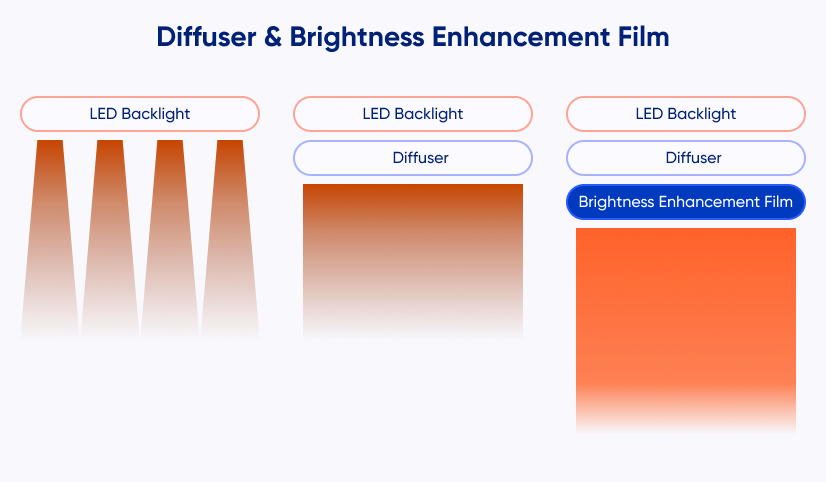
Obwohl beide Elemente in einem optischen LCD-Modul vorkommen, dienen sie völlig unterschiedlichen Zwecken.
| Feature | BEF | Lichtdiffusor |
| Funktion | Erhöht die Helligkeit, indem es das Licht nach vorne lenkt. | Streut das Licht für Gleichmäßigkeit. |
| Wirkung auf die Helligkeit | Erhöht die Helligkeit. | Erhöht nicht – kann die Helligkeit leicht verringern. |
| Auswirkungen auf den Betrachtungswinkel | Verengt sich in Richtung der vorderen Achse. | Verbreitert und glättet die Verteilung. |
| Anwendung | Energieeffizienz, Erhöhung der Leuchtdichte. | Eliminierung von Hot Spots und ungleichmäßiger Hintergrundbeleuchtung. |
Bei den meisten LCD-Modulen arbeiten BEF und Diffusoren zusammen und bilden ein komplettes Lichtmanagementsystem.
Die wichtigsten Vorteile der Verwendung von BEF
Erhöhte Helligkeit und verbesserte Energieeffizienz
Durch den Einsatz von BEF können die Hersteller die gleiche Helligkeit erreichen und gleichzeitig den Stromverbrauch der Hintergrundbeleuchtung um 20-40% reduzieren, was zu einem besseren Ergebnis führt:
- geringerer Energieverbrauch,
- reduzierte Wärmeentwicklung,
- längere Lebensdauer der LED,
- niedrigere Kosten auf Systemebene.
Bei batteriebetriebenen Geräten (z. B. medizinischen Geräten, tragbaren Terminals) ist BEF eine der effektivsten Möglichkeiten, die Betriebszeit zu verlängern.
Besserer Kontrast, bessere Sicht und weniger Blendung
Eine richtig ausgewählte BEF:
- reduziert das Streulicht,
- richtet das Licht auf den Benutzer,
- verbessert den lokalen Kontrast und die Lesbarkeit bei starker Beleuchtung,
- minimiert den “Dunst”-Effekt, der durch unkontrollierte interne Reflektionen entsteht.
Das Ergebnis ist eine höhere visuelle Qualität, insbesondere bei industriellen, medizinischen und Außenanwendungen.
Schlankheit und geringes Gewicht
BEF-Filme sind extrem dünn (typischerweise 60-120 µm) und sehr leicht. Daher sind sie:
- haben keinen Einfluss auf die Abmessungen des Moduls,
- ermöglichen dünnere Gerätedesigns,
- vereinfachen die Konstruktion optischer Stacks ohne Qualitätseinbußen.
Dies ist besonders wichtig für mobile und kompakte Produkte.
Wenn Sie Unterstützung bei der Auswahl von BEF, DBEF oder einem kompletten optischen Stack für Ihr Display benötigen, analysiert unser Team gerne Ihre Projektanforderungen und empfiehlt die optimale Lösung. Kontaktieren Sie unser Team.
DISCOVER OUR
Whitepaper
Achieve the perfect user-display interaction with the right Touch Sensor IC. Ever faced issues with phantom touch events or certification? Boost your R&D like a pro with our Whitepaper!
Go to our product catalog and see how you can save by quality, not on quality.