LVDS display Interface
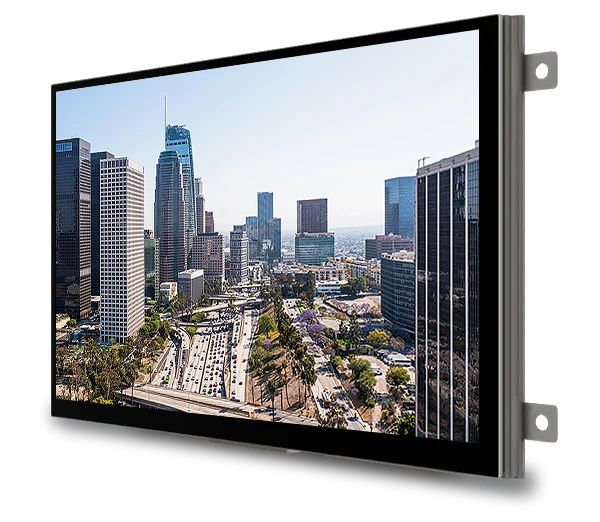
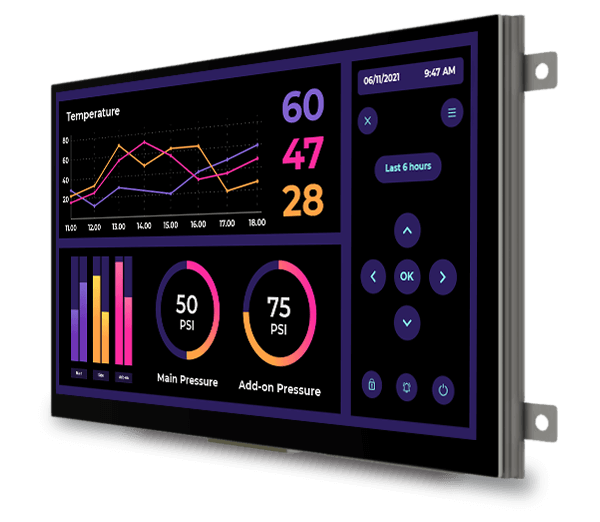
Riverdi LVDS displays give engineers a broad industrial display range for platforms using an LVDS interface, from compact 5″ modules to 15.6″ Full HD panels. The category includes over 17 High-Brightness IPS TFT variants, with brightness up to 1000 cd/m² and options for touch, bonding and mechanical customization.
Currency:
-
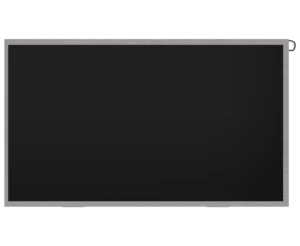
High Brightness IPS display 15.6″ FULL HD LCD TFT 1920x1080px, LVDS interface – RVT156HKLNWN00
$234.43 -
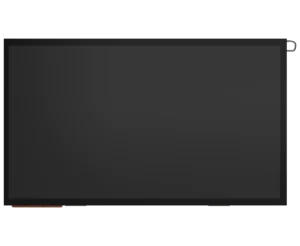
High Brightness IPS display 15.6″ FULL HD LCD TFT 1920x1080px, LVDS interface + Capacitive touchscreen – RVT156HKLNWCA0-B
$350.51 -

High Brightness IPS display 15.6″ FULL HD LCD TFT 1920x1080px, LVDS interface + Capacitive touchscreen – RVT156HKLNWC00-B
$355.01 -
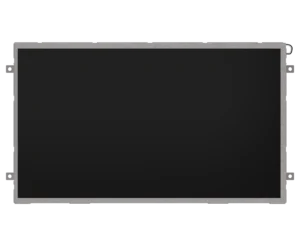
High Brightness IPS display 15.6″ FULL HD LCD TFT 1920x1080px, LVDS interface – RVT156HKLFWN00
$272.07 -
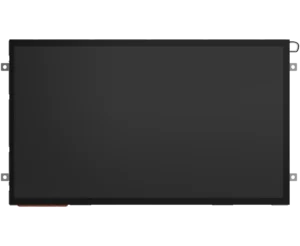
High Brightness IPS display 15.6″ FULL HD LCD TFT 1920x1080px, LVDS interface + Capacitive touchscreen – RVT156HKLFWCA0-B
$386.40 -
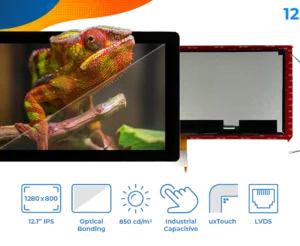
High Brightness IPS display 12.1″ TFT LCD 1280x800px, LVDS interface + Capacitive touchscreen – RVT121HVLNWC00-B
$208.39 -

High Brightness IPS display 12.1″ TFT LCD 1280x800px, LVDS interface + Capacitive touchscreen – RVT121HVLFWCA0-B
$214.99 -

High Brightness IPS display 12.1″ TFT LCD 1280x800px, LVDS interface + Capacitive touchscreen – RVT121HVLNWCA0-B
$205.49 -

High Brightness IPS display 12.1″ TFT LCD 1280x800px, LVDS interface + Capacitive touchscreen – RVT121HVLFWN00
$147.73 -
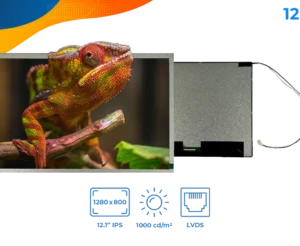
High Brightness IPS display 12.1″ TFT LCD 1280x800px, LVDS interface – RVT121HVLNWN00
$138.23 -
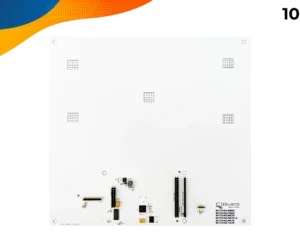
Don Addon 101 LVDS
$49.00 -

High Brightness IPS display 10.1″ TFT LCD 1280x800px, LVDS interface + Capacitive touchscreen – RVT101HVLNWC00-B
$171.24 -

High Brightness IPS display 10.1″ TFT LCD 1280x800px, LVDS interface + Capacitive touchscreen – RVT101HVLNWC00
$150.76 -

High Brightness IPS display 10.1″ TFT LCD 1280x800px, LVDS interface + Capacitive touchscreen – RVT101HVLFWCA0
$156.17 -

High Brightness IPS display 10.1″ TFT LCD 1280x800px, LVDS interface + Capacitive touchscreen – RVT101HVLNWCA0
$148.29 -

High Brightness IPS display 10.1″ TFT LCD 1280x800px, LVDS interface – RVT101HVLFWN00
$108.89 -

High Brightness IPS display 10.1″ TFT LCD 1280x800px, LVDS interface – RVT101HVLNWN00
$101.02 -
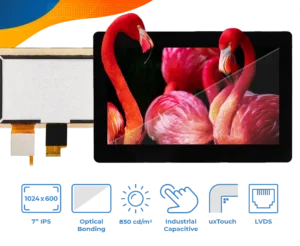
High Brightness IPS display 7.0″ TFT LCD 1024x600px, LVDS interface + Capacitive touchscreen – RVT70HSLNWC00-B
$98.32
What are LVDS displays?
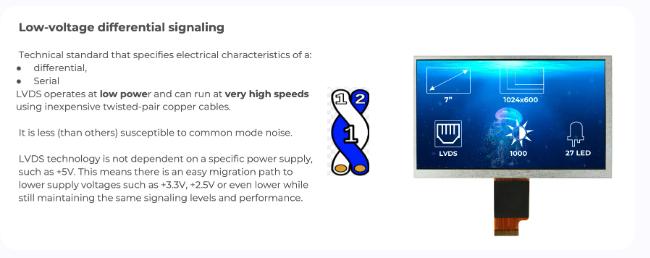
LVDS displays use Low-Voltage Differential Signaling as the video interface between the host controller and the panel. The interface carries video data over serial differential pairs instead of a parallel RGB bus.
LVDS Displays
Riverdi LVDS displays give engineers a broad industrial display range for platforms using an LVDS interface, from compact 5″ modules to 15.6″ Full HD panels. The category includes over 17 High-Brightness IPS TFT variants, with brightness up to 1000 cd/m² and options for touch, bonding and mechanical customization.
What are LVDS displays?
LVDS displays use Low-Voltage Differential Signaling as the video interface between the host controller and the panel. The interface carries video data over serial differential pairs instead of a parallel RGB bus.
RGB displays stay simple when the controller and panel sit close together. LVDS is the more practical option when the display is mounted away from the main board.
LVDS remains common in industrial controllers or legacy platforms. MIPI DSI displays also use differential lanes, but it comes from a newer application-processor and SoM design path. As Tomasz Soldat, Riverdi CTO, puts it: “LVDS is still used because it is predictable: known signal behavior, broad controller support and enough margin for industrial display links.”
Benefits of LVDS displays
The front panel may sit in a cabinet door, while the main board stays deeper in the enclosure. In that layout, parallel RGB means more signal lines, more timing skew and less noise margin. LVDS gives the design routing distance, so the mechanical layout does not have to be forced around a short display connection.
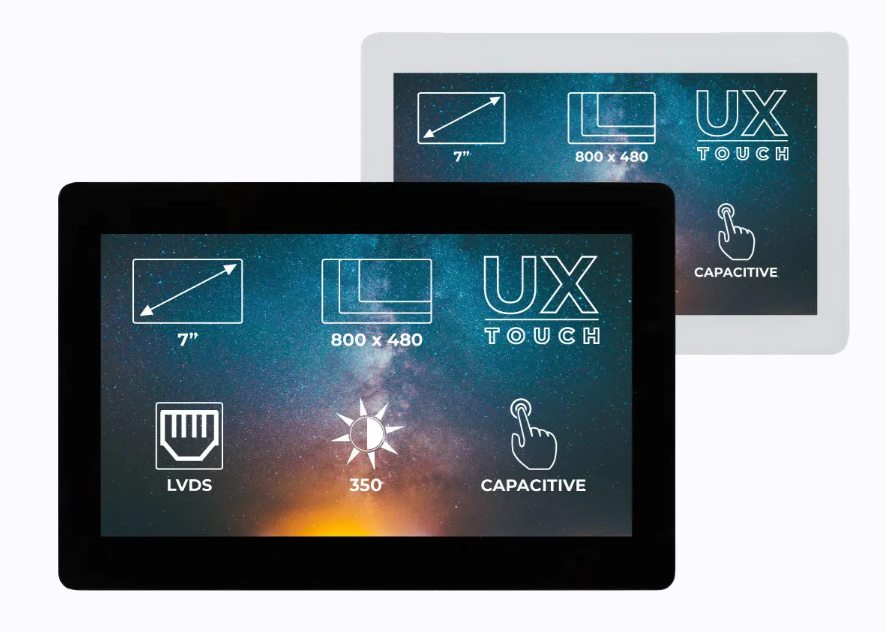
Serial differential signaling gives LVDS better immunity in devices with motors, relays, power supplies or industrial drives.
LVDS also works well in product refreshes. Riverdi LVDS displays support Full HD resolution up to 1920×1080 px, so the legacy architecture can stay on LVDS instead of forcing a platform change to MIPI DSI.
LVDS displays in various applications
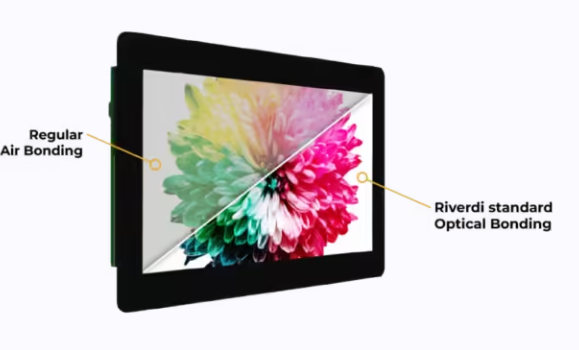
Industrial HMI and SCADA systems often use 7″ to 15.6″ LVDS displays. Medical monitors and lab instruments usually use 10.1″ to 15.6″ variants. The Riverdi modules use High Brightness IPS panels with brightness up to 1000 cd/m² and in-house optical bonding, so they fit factory lighting, semi-outdoor installations, medical workstations and public-facing terminals.
Digital signage, kiosks and information terminals often use 10.1″ or 12.1″ LVDS displays.
Military and rugged devices use LVDS where vibration, longer internal routing and electrical noise are part of the design. The interface is common in industrial hardware, which helps when the product needs replacement parts over a long lifecycle.
Riverdi’s engineering team can adjust the front stack, touch behavior, bonding, mechanics and housing to match specified operating conditions (see the customized solutions).
Riverdi LVDS display manufacturer
Riverdi has designed and manufactured display modules in Europe, Poland since 2012. For LVDS projects, the panel, touch, mechanics and non-standard changes stay under one engineering process. Riverdi runs optical bonding in-house, so bonding is not moved to a separate vendor when the front stack changes.
LVDS is one of Riverdi’s widest interface ranges, with more than 17 display variants from 5″ to 15.6″. The same portfolio also includes RGB and MIPI DSI, so you can stay with the same display supplier between different versions of the product.
Standard LVDS displays are available without MOQ and can be globally sourced through RS Components, DigiKey, Mouser, and TME. Components are selected for 10+ year availability. When your project needs to go beyond the catalog version, Riverdi adapts the standard LVDS module.